
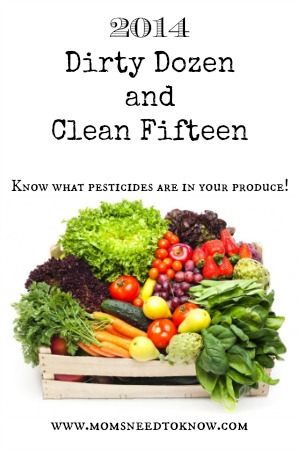
If you have been reading this site for a while, you know that I take the Dirty Dozen and Clean Fifteen very seriously.
What are the Dirty Dozen and the Clean Fifteen?
- The “Dirty Dozen”: if you have to make choices in what organic produce you are going to buy, these are the ones that you should spend the extra money to buy organic as they are the ones with the highest amount of pesticides. Where possible, you might want to also consider growing these fruits and vegetables yourself!
- The “Clean Fifteen”: these are the ones that have the lowest level of pesticides. You are generally fine buying the “regular version” of these items!
The Dirty Dozen and Clean Fifteen is all about helping you to make better choices in your produce purchases. While most of us would probably like to buy only locally-sourced organic produce, the reality is that isn't financially possible for most people. Choices often need to be made and that is where the Dirty Dozen and Clean Fifteen guidelines will help you make those choices! For several years I have relied on the “Dirty Dozen & Clean 15″ list put out by the Environmental Working Group. The list gets updated each year based on current trends in farming practices and they recently updated it for 2014!
Making informed choices about the food we eat naturally leads to curiosity about where and how it’s grown—and for some, that curiosity sparks an interest in pursuing a career in agriculture. From sustainable farming practices to food supply chain management, the industry is full of opportunities for people who want to make a meaningful impact.
There are many ag jobs in Australia that cover areas like crop production, organic farming, agribusiness, and research, each playing a part in shaping healthier food systems. Building a career in this space not only supports personal growth but also contributes to a future where good food choices start right at the source.
Once again, the lists go beyond their numbers with a few "bonus items". The Dirty Dozen has 2 additions to the list. Per the EWG:
For the third year, we have expanded the Dirty Dozen™ with a Plus category to highlight two foods that contain trace levels of highly hazardous pesticides. Leafy greens - kale and collard greens - and hot peppers do not meet traditional Dirty Dozen™ ranking criteria but were frequently contaminated with insecticides that are toxic to the human nervous system. EWG recommends that people who eat a lot of these foods buy organic instead.
Some other interesting tidbits from the report:
- Every sample of imported nectarines and 99 percent of apple samples tested positive for at least one pesticide residue.
- The average potato had more pesticides by weight than any other food.
- A single grape sample contained 15 pesticides. Single samples of celery, cherry tomatoes, imported snap peas and strawberries showed 13 different pesticides each.
Nice! (not)
Anyway - without further ado, here are the 2014 Dirty Dozen and Clean Fifteen lists:
The Dirty Dozen: these are the fruits and vegetables with the most pesticides (and the ones that you should buy organic as much as possible):
- Apples
- Strawberries
- Grapes
- Celery
- Peaches
- Spinach
- Sweet bell peppers
- Nectarines (imported)
- Cucumbers
- Cherry tomatoes
- Snap peas (imported)
- Potatoes
The "Dirty Dozen Plus" items are:
- Hot peppers
- Kale and collard greens
The Clean Fifteen: these are the fruits and vegetables with the least amount of pesticides
- Avocados
- Sweet corn
- Pineapples
- Cabbage
- Sweet peas (frozen)
- Onions
- Asparagus
- Mangos
- Papayas
- Kiwi
- Eggplant
- Grapefruit
- Cantaloupe
- Cauliflower
- Sweet potatoes
Do you buy organic produce? Will these lists change your buying habits?